Posts

Goodbye, Japan! (For Now)

Image
I realize that I've had a few negative posts recently about my time here in Japan. However, these posts don't reflect my perspective on the country as much as they reflect my own quibbles (in regards to teaching for a private company that cares more about profit than it does its students) and my own struggles (in regards to making authentic connections with people); although there are certainly cultural aspects to both of those that are part of my criticism, the cultural role is minor. In short, the negative posts don't reflect my overall impression of the country. As I wrap up my time here, I have to stand back and express my sincere appreciation for this beautiful country - its people, its culture, and its traditions. As if I need to state the obvious, there is no other country I have visited or lived in whose people are quite like the Japanese: the orderliness, the selflessness, the kindness. It's an amazingly complicated society with an exquisitely rich history...
Alone in a Crowd

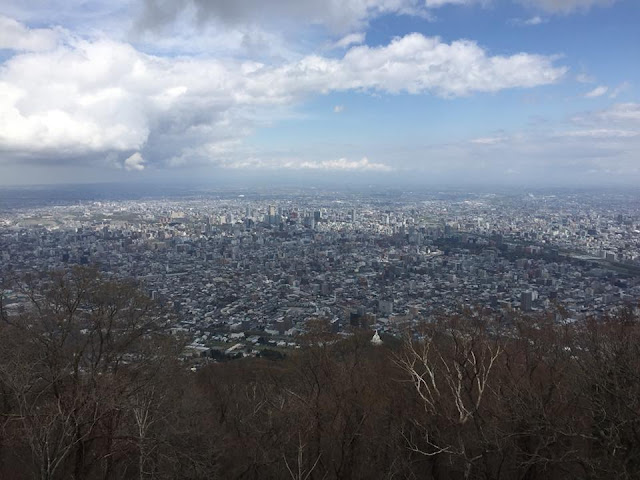
Tokyo is the 7th city I have lived in and Japan is the 6th country I have lived in. I have lived in a few cities over a million people - and visited many more - but nothing like the size of Tokyo. Just so you know, Tokyo is the largest urban area (not the largest city - that honor goes to Shanghai) in the world at around 37 million people. Outside of your neighborhood, daily route to work, or your regularly patronized waterholes, there is an extremely small chance you'll ever run into the same person twice. But at the same time, there are throngs of people EVERYWHERE you go. Sometimes it feels like it's difficult to get a respite from the crowds unless you're at home! But what I have found is that there is a palpable feeling of being alone in a crowd while living here. Partly, I think this is cultural. In Japan, people often keep to themselves and striking up a conversation with strangers is simply not done like it is in, say, smalltown Midwest in the United States. From ...

Kanazawa

Image
I chose Kanazawa as my last big trip in Japan. I had mostly been wanting to visit Kanazawa since I had arrived in Japan because an acquaintance from high school had lived in the same prefecture as Kanazawa for many years with his wife. However, once I started to learn more about what Kanazawa has to offer, I wanted to visit the city on its own merits (especially since my friend moved to the United States with his wife earlier this year). Kanazawa is known as one of Japan's traditional cultural centers. Kanazawa is one of the few major cities (including Kyoto) in Japan that escaped bombing by US forces during World War II. As a result, there are many historic buildings that are still standing, which is most apparent in the Higashi Chaya-gai district. This area was traditionally the tea house and geisha district - a tradition that still continues as many of the businesses in the district seemed to be cafes that retained at least a little bit of the traditional decor of the...

The Airing of Grievances

Don't get me wrong. I love my students. The students I'm teaching now are overall the best students that I've ever taught - motivated and energetic with great attitudes to boot. I cherish the freedom I have to create lesson plans that engage them and suit their levels. What I don't appreciate are some of the practices of the company I work for. I work for a private company in Japan that contracts out English programs (curricula, teachers, the whole kit and caboodle) to universities. Universities do this to save money on direct hires of English instructors. On a personal level, I've had no issues with the individual staff members I have dealt with, but I've a lot of issues with how things are done - especially the inconsistencies. One inconsistency is based around the curricula. The curricula are cobbled together and the curriculum from one course for one set of students is often carried over almost verbatim to other courses despite the students' levels a...

Developments in Critical Thinking in My Class: Part 1

As I mentioned in an earlier post, I have been really enjoying teaching the group of students I have this semester. They are motivated and energetic, and I rarely have to pull teeth to get the students participating in speaking activities (with the exception of a couple of isolated incidents). As such, I've been gradually introducing critical thinking elements into classroom activities. At this point, I'm defining critical thinking as the questioning of one's assumptions in order to evaluate perspectives and worldviews from a broader perspective. However, I would say that as the semester has gone on, I've only just edged into the first part of that definition: the questioning of one's own assumptions . I wouldn't say most of the activities I've introduced have been focused on critical thinking, and I'm not teaching it explicitly. I do think many of my fluency activities have subtlely introduced basic elements of critical thinking: asking for opinions,...

Traveling in Japan: Sapporo

Image
My last stop on my Hokkaido trip was its capital city: Sapporo. Sapporo is most widely known for its namesake beer, which is the oldest beer in Japan and the #1 best-selling Japanese beer in the United States, but it has more to offer! I arrived in Sapporo in the evening, so I waited until the next morning to start exploring. I decided that since the weather was pretty nice, and I had missed my hiking opportunity in Hakodate, that I would do some hiking early on in the morning. My hostel was near Maruyama Park, which has a small 200-meter mountain within its boundaries. As I was walking around the park and looking at some cherry blossom trees early in the morning, I saw that some groups were setting up tarps for picnics on the second to last day of the holiday week. Some of the younger groups were already drinking - possibly continuing the fun from the night before. Others were patiently waiting for the rest of their parties to arrive. The climb up Maruyama afforded some nice vie...

Traveling in Japan: Hakodate

Image
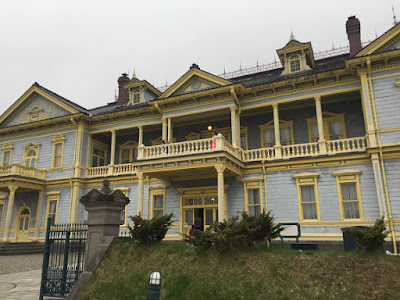
Hakodate is one of Hokkaido's largest cities, and it lies on the southern tip of the island. It has a lot of history from a Western perspective because it was one of three ports in Japan that Western traders could use after Japan opened up commercially a couple hundred years ago. As a result, there are still relics of the Western presence in the presence of Victorian-era houses and churches (including an Orthodox Church founded by the Russian consulate). For me, however, the real jewel of Hakodate was Goryokaku, and it was possibly my favorite part of my trip in Hokkaido. Before I went to Hokkaido, I read a "cherry-blossom report" which shows when cherry blossom trees are expected to bloom around Japan. I saw that not only were the cherry blossoms expected to be in bloom while I was in Hokkaido, but Hakodate is one of the best places to see the cherry blossom trees. This is because Hakodate has a park called Goryokaku ("pentagonal" in Japanese) which has 1,6...

Traveling in Japan: Noboribetsu

Image
The northern Japanese island of Hokkaido has interested in me for a while. I've seen pictures from my friends who have visited and from my guidebook depicting a wild an open land filled with bears and foxes, sulfuric hot springs and snow-covered mountains, and snowboarding and biking opportunities. Hokkaido is much less densely populated than Japan's main island, Honshu, which has Tokyo, Osaka, and Kyoto, as well as other major metropolitan areas. Therefore, Hokkaido is not as an outdoorsy getaway from the hustle and bustle of Honshu city life. My 5-day trip in Hokkaido started out in the onsen town of Noboribetsu. After flying from Tokyo's Narita Aiport to New Chitose Airport in Hokkaido, I took a couple of trains to get to Noboribetsu (take my advice and spend the extra money on express trains), and I finally took a bus from JR Noboribetsu Station to the onsen part of Noboribetsu. Planes, trains, and automobiles! For those of you who don't know, onsen is defin...

Cross-Cultural Education in the Classroom: Now and Then

One topic that has interested me ever since I taught English at a high school in Korea is the intersection between education and culture. In my blog about my time in Korea, I discussed the problems with creating a student-centered classroom in Korean culture. This notion seems like it stems from Confucian ideas that view the nature of education as transactional and teachers as the gatekeepers of knowledge. When I tried to flip the classroom from what the students were used to (teacher-centered lectures) to what I thought would be advantageous for developing English speaking fluency (a student-centered, communicative and task-based approach), there was often a lot of confusion. Additionally, it was often difficult to get the students to speak any English at all for a variety of reasons. Teacher-centered classrooms were deeply embedded in the cross-section of education and culture in Korea, and that seems to be the case here in Japan as well. Generally speaking, most university classes...

The Challenges of Achieving a Full-Time Position at a Japanese University

Before coming to Japan, I talked with several friends and acquaintances who had either taught English in Japan in the past or who are currently teaching English here. Many of them had not had experience teaching English at the university level, but most had generally been positive about their experiences in Japan with the one caveat that they hadn't been able to save much money (from what I understand, this is true unless you work for JET). Since I was aiming to teach at the university level, I sought the advice of a specific acquaintance. This acquaintance has been teaching English at a university in Japan for several years. He warned me about several factors that might impede my successful pursuit of university-level employment. I optimistically did not think his assessment of the current job market would be true across the board (what did I know?!), but I believe he was correct on each point. I'll go through the list: 1. Stricter Requirements Compared to Similar Positio...

Traveling in Japan: Nara

Image
Along with Miyajima, my favorite stop on my winter break travels was Nara. In fact, my planning for this trip started with Nara because I was told that it would be a good place to witness a more traditional New Years Eve in Japan. Since Kyoto is the center of traditional Japan what with all of their temples and history, Nara is often thought as a smaller, less well-known Kyoto. Similar to Kyoto, Nara is full of temples and its citizens display a more laid-back sort of life apart from the madness of cities like Tokyo and Osaka. It is worth mentioning that my favorite hostel during my travels was also in Nara: Nara Backpackers. A 100-year-old house had been converted into a hostel. It was definitely the coziest hostel experience I have experienced, and the house and garden itself were beautiful. Additionally, the host (seemingly the only employee) was also incredibly nice. He was a young Japanese guy who had lived in Canada for a year giving tours to Japanese tourists to see th...

Lesson Planning - Formal Complaints

Background :   As part of my duties as an English teacher in Japan, I teach English writing to university students. The curriculum confoundingly focuses on contexts and lexical chunks rather than starting with a foundation of specific grammar points or specific structural elements in writing (such as transitional/signal words and phrases) and building from there. Even though my students are studying subjects like law, architecture, and mechanical engineering, they are all required to take English writing. As a result, it can be difficult to keep the students motivated, especially compared with our speaking classes. With this in mind, I have been trying to incorporate more kinesthetic activities into my writing lessons. One wouldn't think that writing classes would present ample opportunities for kinesthetic activities, but so far it seems to have served the lessons well by keeping the students energized and engaged. This is based on a pre-written lesson plan that I changed and ...

Traveling in Japan: Kobe

Image
Kobe is known for, among other things, being Japan's preeminent port city. However, by the numbers, Kobe has dropped to being Japan's 4th busiest port after a 1995 earthquake demolished the city. Despite this, it was one of the first cities to open up to the West for trading after Japan's long period of isolation with the Western world and continues to be an economic center in Japan as it is the home to many of Japan's largest corporations, such as Kawasaki and Kobe Steel. After I arrived, I walked around their Harborland area which is a recreational area apart from the great number of imposing shipyards and large corporate buildings that litter the coast of Kobe. As a result of being one of the first Japanese cities to trade with Western powers, there are lingering relics of the West's footprint in the city. Most visible is the Kitano area where foreign diplomats lived in somewhat ostentatious houses. These houses are now open for tours. On my only full day in K...

Traveling in Japan: Naoshima

Image
Naoshima is a Japanese success story. Prior to the late 1980s, Naoshima was experiencing a more-than-gradual decline in population like many other small towns in the developed and developing worlds. People are having fewer children and more people are moving to the cities for work. Naoshima, being a small island with a small population, was certainly not immune to these trends. However, according to the Benesse Museum website , a joint decision was made by Benesse Holdings and the local administration of Naoshima in 1985 to develop the southern part of the island as a cultural draw for visitors. This eventually turned into the purchase of land and the development of several art museums and installations. Now, according to NPR , the island has seen not only a surge in their economy by way of tourism and cultural events based around the island's art museums and projects, but the island has also experienced a slight increase in their population. My trip to Naoshima from Hiro...